
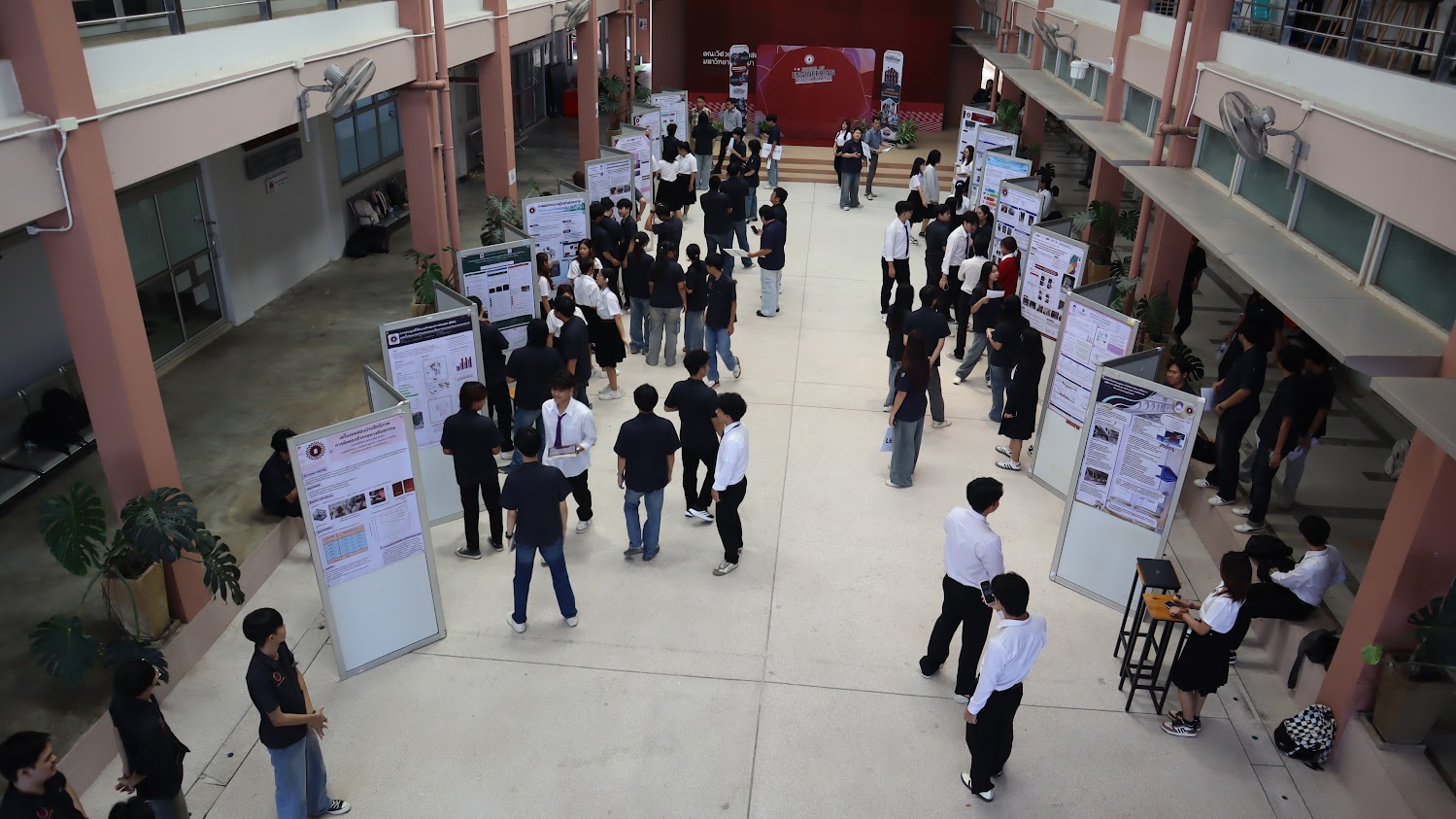
Napaphat Rueangwong, a fourth-year undergraduate and a member of the Integrated Systems Laboratory (ISL), exhibited her senior project at Project Day, the School of Engineering’s annual showcase of graduating students’ work, held at the EN 1–2 activity plaza for the 2569 BE (2026) academic year.
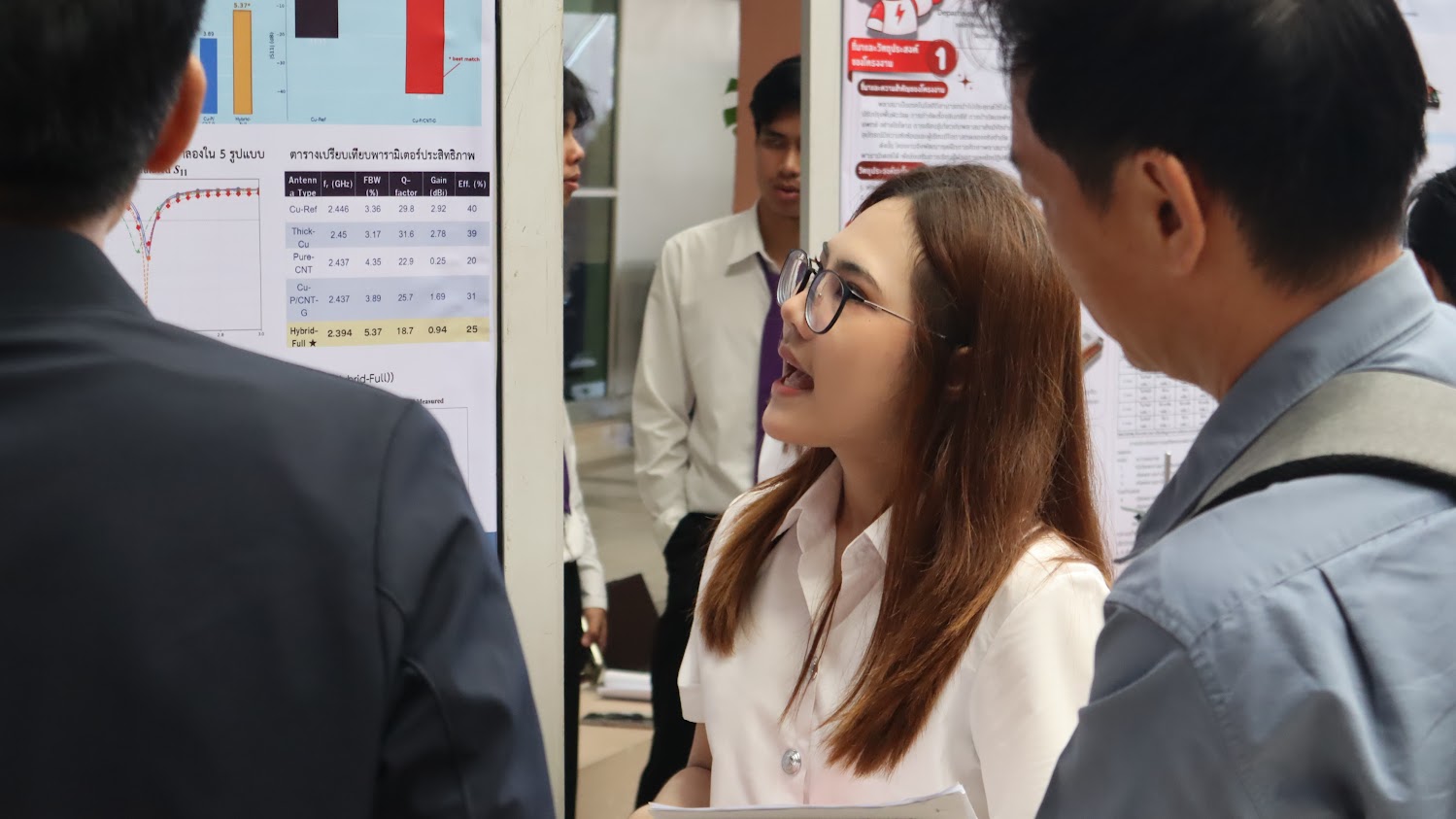
Her project is titled Fractional Bandwidth Enhancement and Miniaturization of Hybrid MWCNT/Cu Antennas. It concerns antennas whose conducting structure is a hybrid material — multi-walled carbon nanotubes combined with copper — and it pursues two properties that ordinarily work against one another. Fractional bandwidth is the span of frequencies an antenna serves, expressed as a proportion of its centre frequency; miniaturisation is the reduction of its physical size. Shrinking a conventional antenna narrows the band it can usefully cover, so improving both at once means reconsidering what the radiating structure is made of rather than only how it is shaped.
Project Day is the point in the degree at which a senior project is defended out loud. For one day the plaza becomes a poster hall: boards go up along the walkway and students stand beside them while faculty, visitors and students from earlier year groups walk the rows and ask whatever they like. Mechanical, Civil, Electrical and Industrial Engineering all exhibit together, so the people standing in front of any given board are rarely specialists in it.
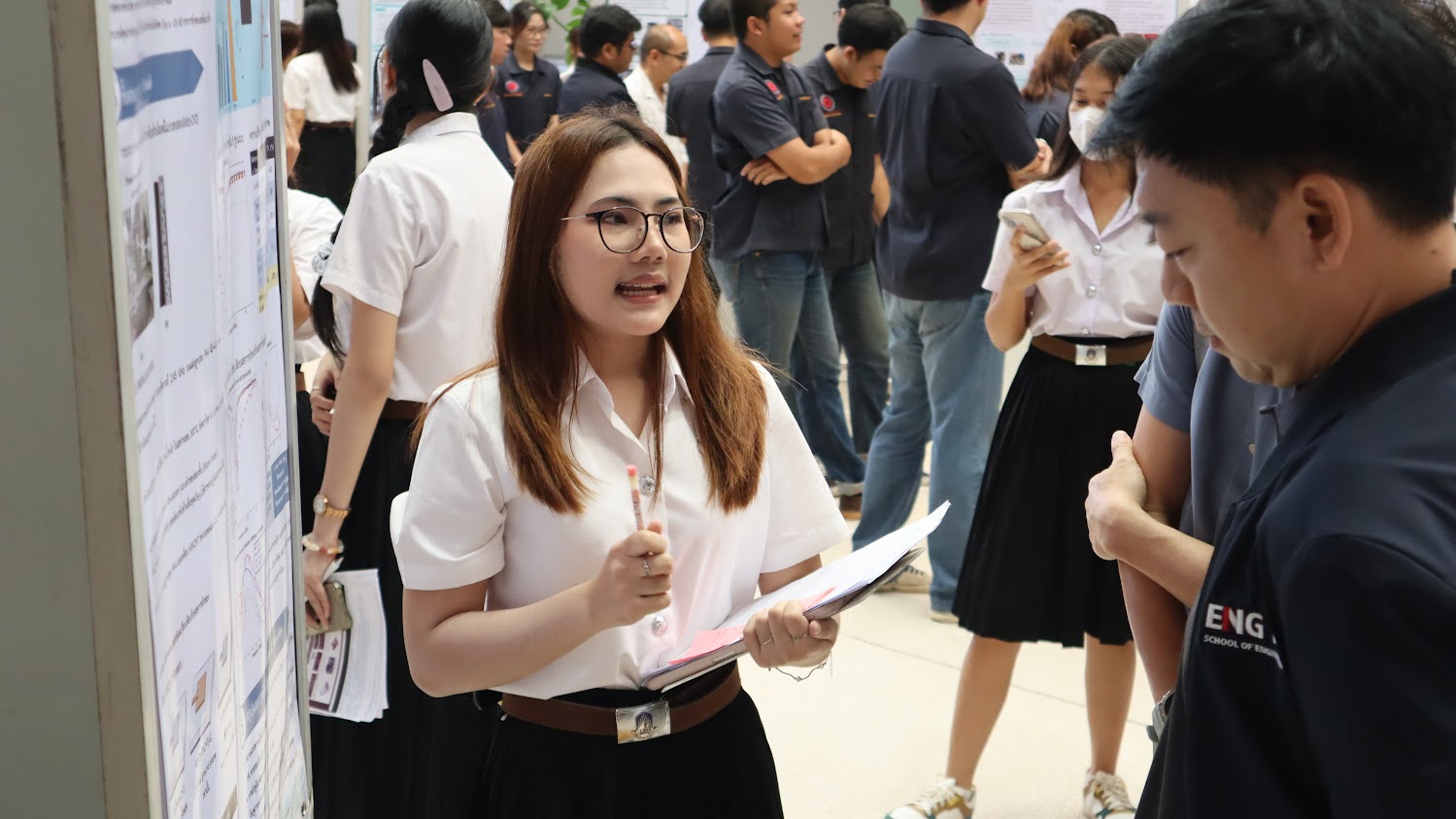
That detail shapes what the day really tests. A written report can be read in silence; a question cannot be anticipated. Students have to account for the design decisions behind the work, say which engineering principles the result rests on, and put a year of specialised effort into terms a civil engineer — or a second-year student — can follow. Doing that well tends to require having understood one’s own project more thoroughly than submitting it ever demands.
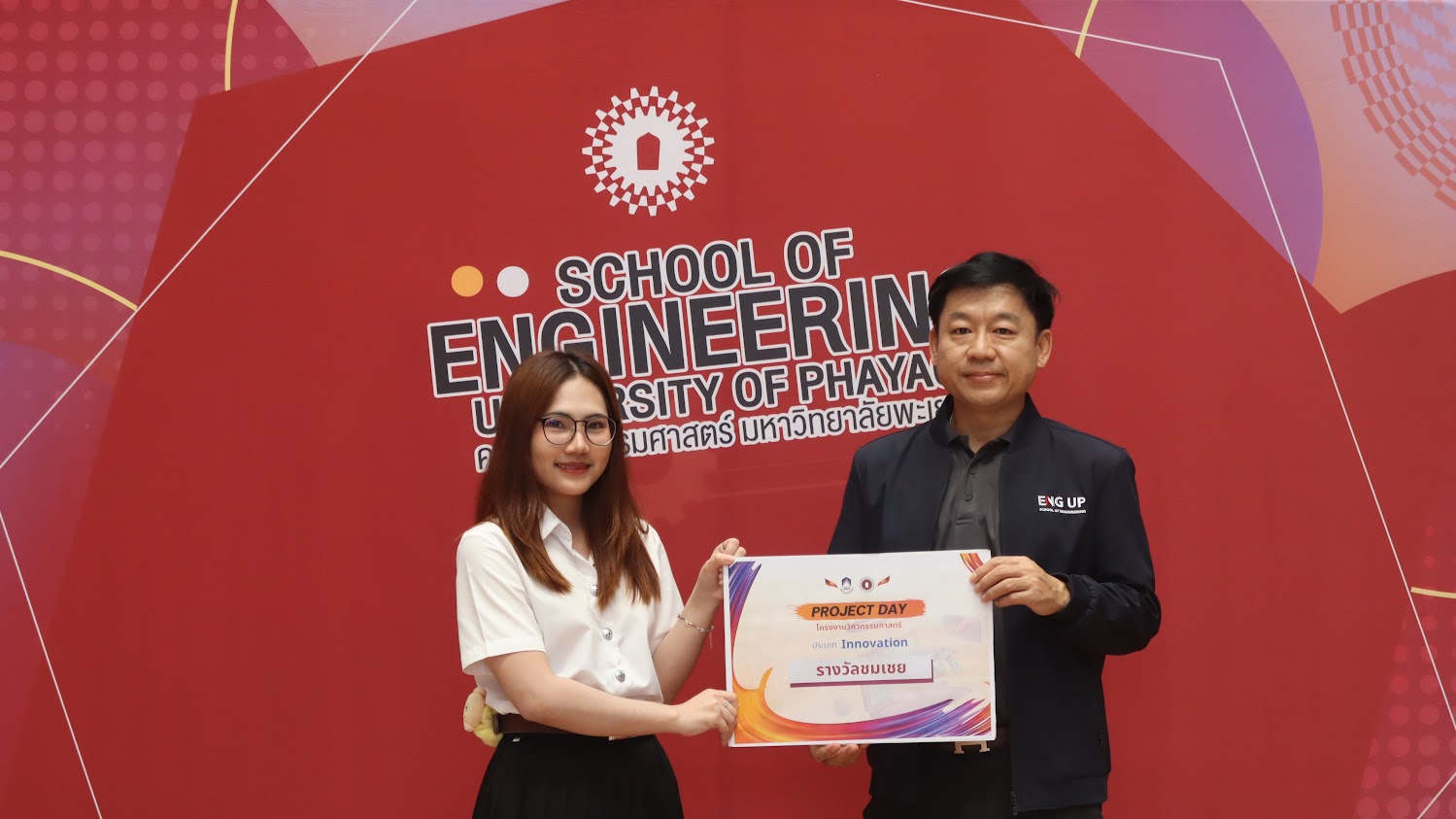
Entries were judged in four streams rather than against a single standard, so that projects with different aims could be assessed on their own terms: Community Change Agent for work serving a community need, UI Green for work on sustainability and the environment, Innovation for work introducing something genuinely new, and a general category for everything else. An award went to the strongest entry in each.
For ISL the exhibition closes a cycle. Laboratory work is mostly private — a year of measurements, revisions and dead ends that nobody outside the group sees. Project Day is where it stops being private, and where a student finds out which parts of the argument still hold once someone else is the one asking.
Leave a Reply