
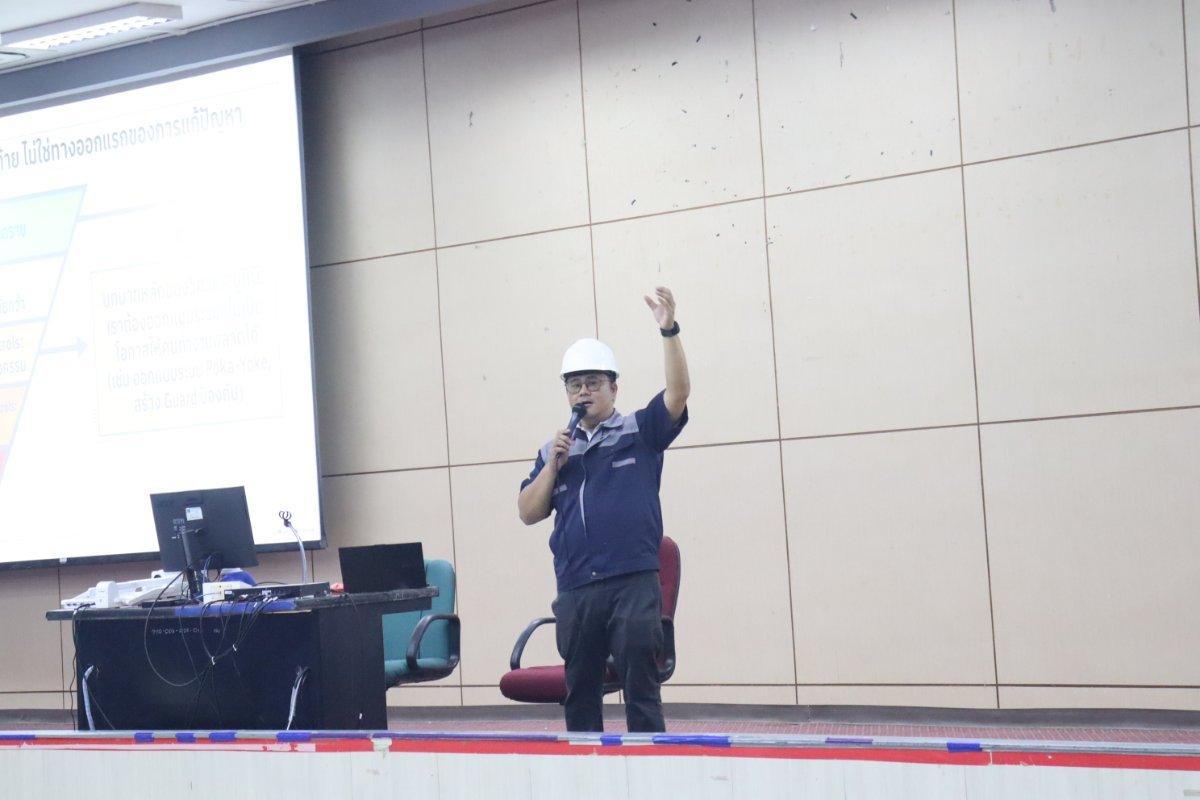
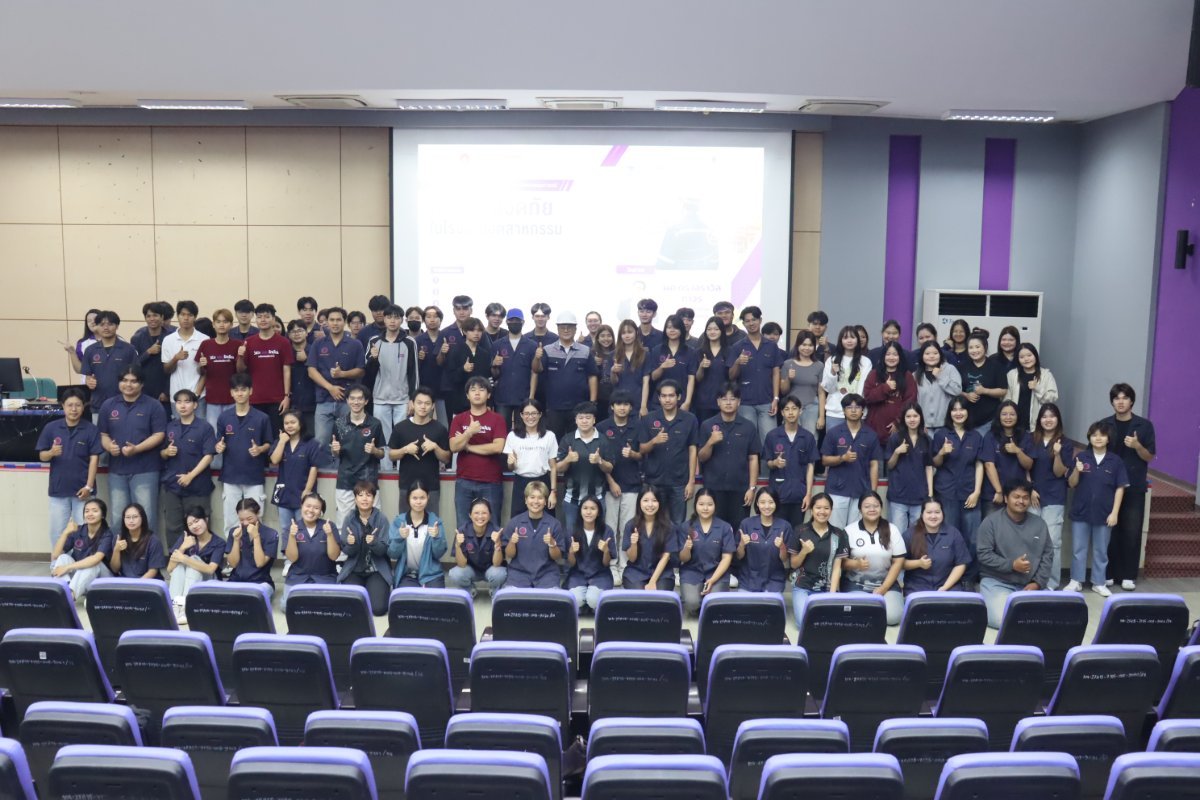
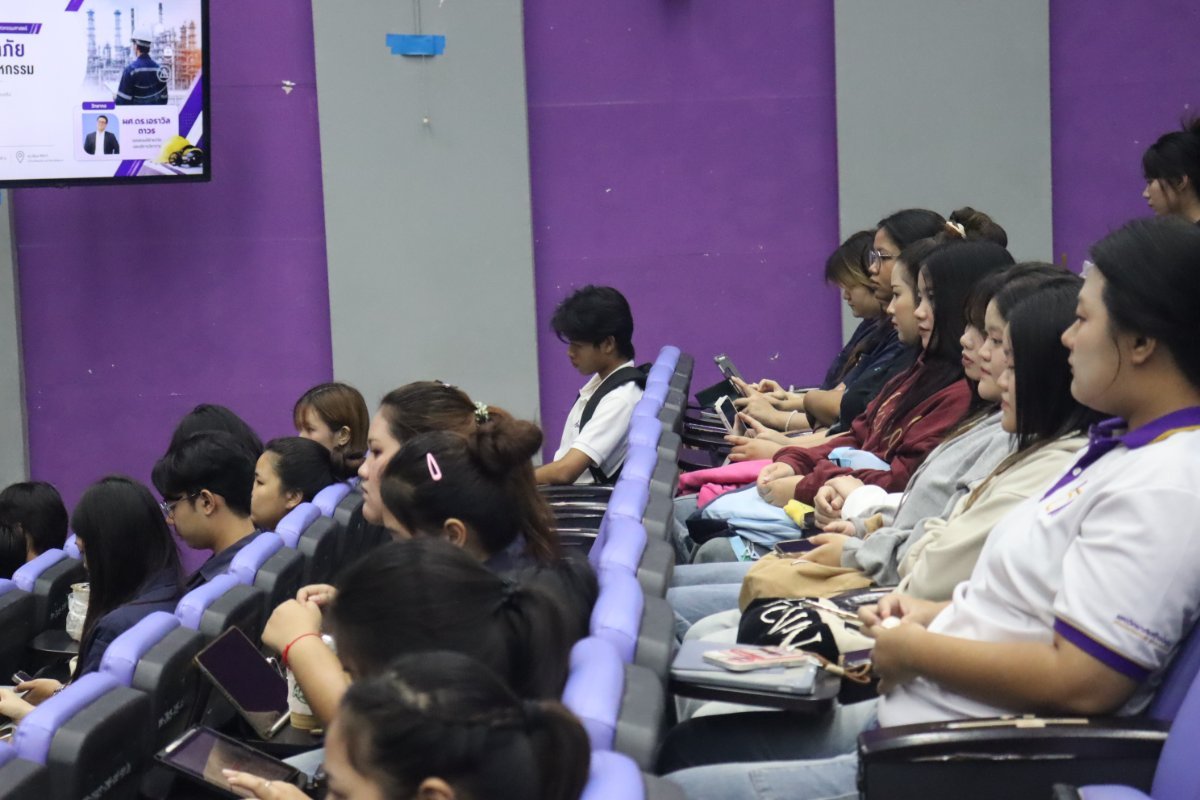
The School of Engineering, University of Phayao held a training session on safety in industrial plants in room PKY1 of the central teaching building — part of the same programme preparing students for internships and co-operative education placements as the AI session reported here earlier this month. Asst. Prof. Dr. Wasana Naku, Associate Dean for Academic Affairs and Quality Assurance, opened the session, and Asst. Prof. Dr. Erawin Thaworn, Associate Dean for Research and Academic Services, gave the lecture.
He spoke on two topics in sequence — the role and duties of the engineer at work, and then safety in the workplace — and the order is the argument. Safety is not a separate subject bolted onto an engineering education. It follows from what an engineer is responsible for: a person who accepts that a design, an installation or a measurement is theirs to answer for has already accepted that the conditions under which it is carried out are theirs as well.
One detail from the session made the point more economically than any slide. The speaker delivered the talk wearing a hard hat. Protective equipment is not a rule a student complies with when someone is watching; it is a habit that has to be in place before the moment it is needed, because the situations where it matters are exactly the ones nobody saw coming.
A laboratory bench is not a plant floor, and the hazards in instrumentation and antenna measurement are smaller than those in heavy industry. The discipline is the same one, though: assess what could go wrong before starting, not after. For students about to spend months in a real workplace, the useful outcome of a session like this is not a list of regulations remembered but a changed default — looking for the risk first, by reflex.
Leave a Reply